Best Tokyo Photography Locations
Tokyo photographs as two different cities depending on the hour: a dense, historic old town by day, a neon-lit megacity by night. The five spots below are all on our Tokyo Photo Map, and between them cover most of what makes the city worth pointing a camera at.
Best season
Year-round — this is a city map, not a seasonal one.
Best light
Blue hour and after dark for the skyline and neon; early morning for temples and shrines, before the crowds arrive.
Photography style
The contrast between old Tokyo — temples, shrines, narrow streets — and the modern skyline and neon underneath it.
Shibuya Crossing
The busiest pedestrian crossing in the world, framed by the city's densest wall of screens — Tokyo's signature image of organized chaos.
It works at almost any hour, but the crossing really turns into a Tokyo photograph once the screens start doing the lighting for you, from blue hour on.
Sensō-ji and the old town
Tokyo's oldest temple, reached through the Nakamise shopping street and a giant red gate — the most traditional-feeling corner of the city, a few train stops from Shibuya's neon.
Arrive before the shops open. It's the difference between a temple courtyard you can actually see and one you're photographing over other people's heads.
Tokyo Tower from Zōjō-ji
Tokyo Tower's red-and-white lattice reads completely differently depending on where you stand — from Zōjō-ji Temple's own grounds, the tower shares the frame with a five-story pagoda instead of just office towers.
The tower's lighting changes for the season and for special occasions, worth knowing if a particular color matters to your shot.
This one's on our Tokyo Photo Map, with exact coordinates and field notes.
See the map →Hie Shrine's torii tunnel
A tunnel of red torii gates climbing to Hie Shrine, tucked into central Tokyo a short walk from Yoyogi Park's open green — a compressed, graphic frame that's the opposite of the park's wide space.
The gates are narrow enough that a few people in frame change the shot completely — timing your visit matters more here than at Tokyo's larger shrines.
Shinjuku after dark
Shinjuku's streets are Tokyo's classic night-photography subject — dense signage, narrow lanes, and enough neon that a tripod is often more limiting than useful.
Blue hour into full dark is when the signage actually reads as light rather than clutter against the sky.
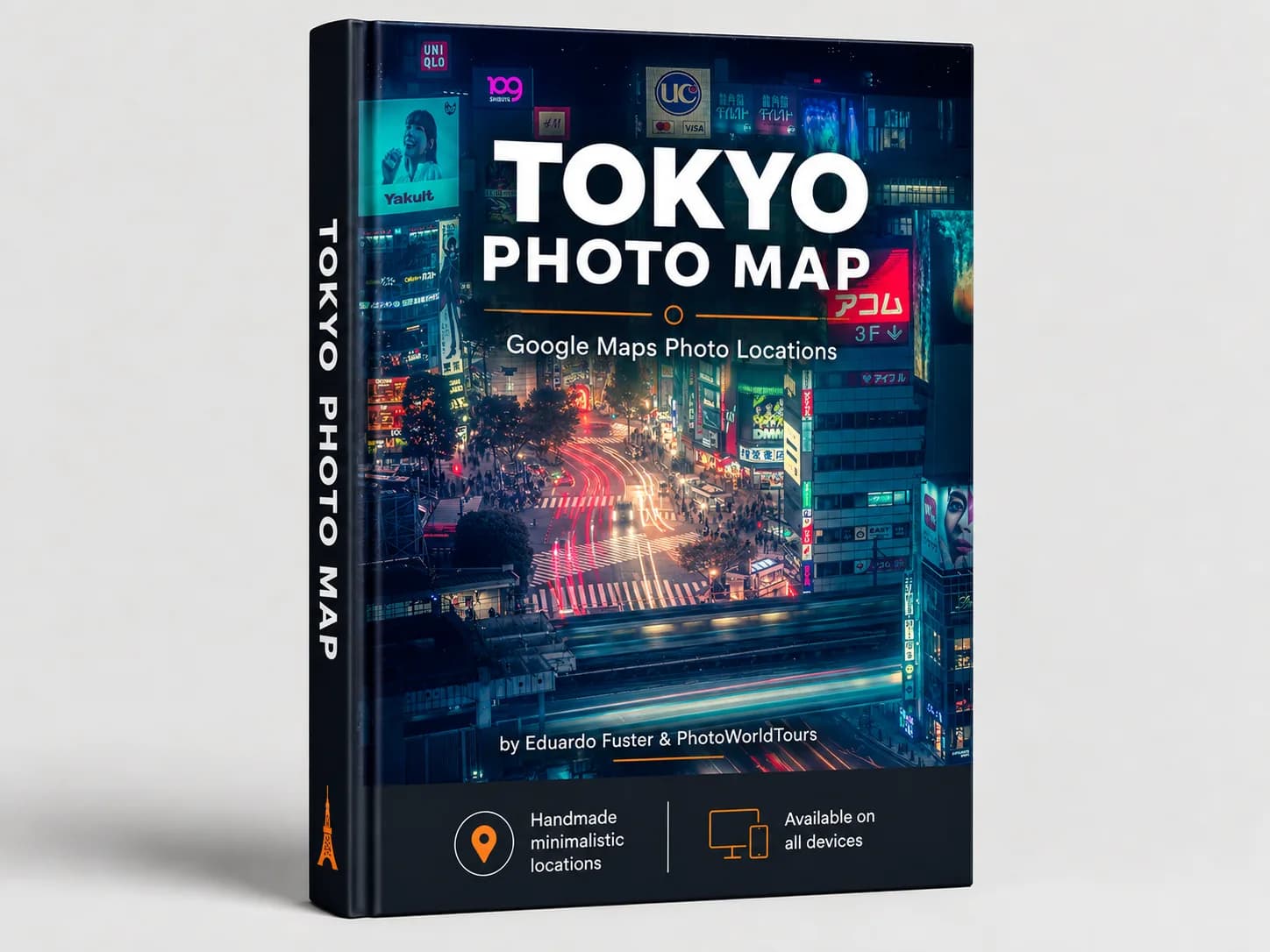
Our Tokyo Photo Map includes these locations and more — with exact coordinates, the best time of day to shoot each one, and real field notes.
Eduardo Fuster — photographer and founder of PhotoWorldTours.